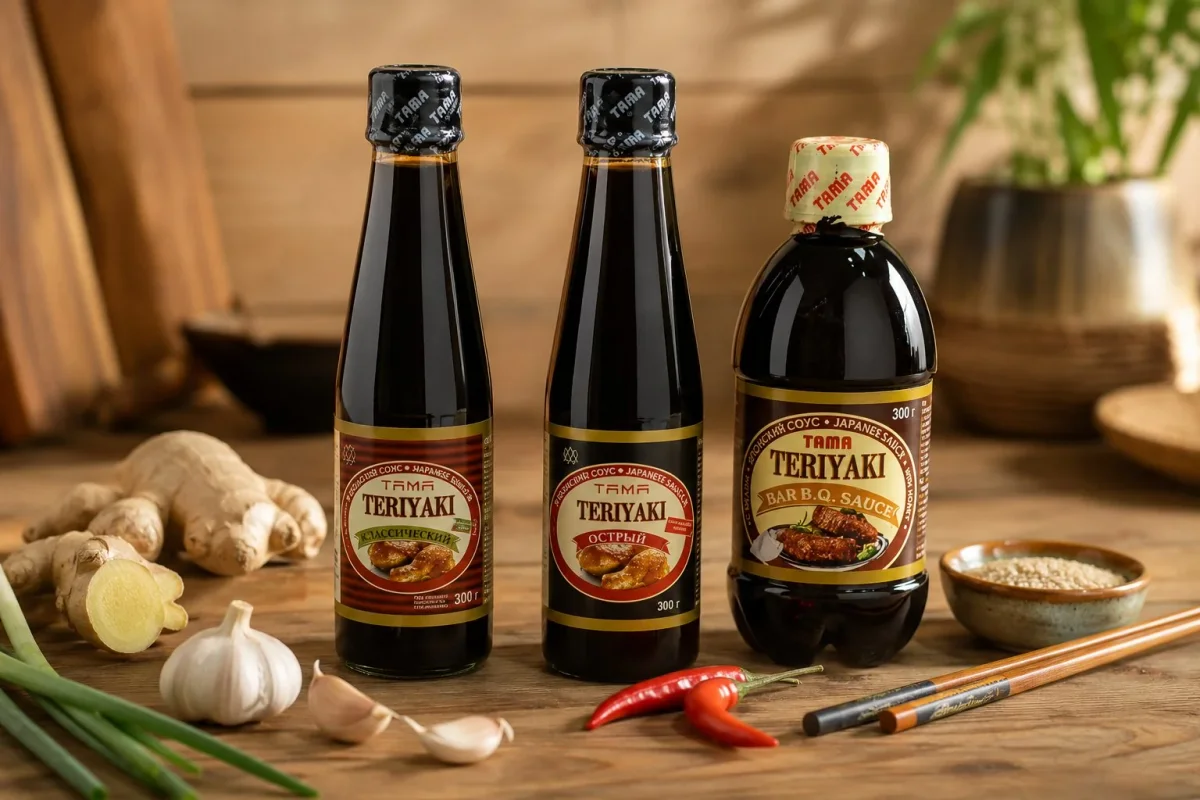
Teriyaki is one of the most recognizable sauces in Asian cuisine. The name comes from two Japanese words: "teri" (glaze) and "yaki" (grilling). Classic teriyaki is a glaze based on soy sauce, mirin, sugar, and ginger that produces a characteristic shine and caramel crust when heated. Today, teriyaki is used far beyond Japan — in burgers, on the grill, in woks, and even in home kitchens across Kazakhstan. The TAMA lineup features three teriyaki varieties: classic, spicy, and BBQ. In this article, we'll break down how they differ and which to choose for a specific dish. Quick answer to the most common question: classic teriyaki is not a spicy sauce, but the lineup does include spicy varieties. Details and a picking guide — below.
What Is Teriyaki and How Does It Work
Teriyaki is both a sauce and a cooking technique. In Japanese cuisine, the teriyaki technique means pan-frying a product while repeatedly applying glaze. The sauce caramelizes on the surface, forming a thin, glossy crust. Inside, the product stays juicy, while the outside is coated with a sweet-salty, glossy film.
The basic components of classic teriyaki: soy sauce (provides umami and saltiness), sugar or mirin (sweetness and caramelization), ginger (spicy freshness), garlic (depth of flavor). The glaze thickens naturally through sugar caramelization when heated.
Three TAMA Teriyaki Varieties: What's the Difference
Classic Teriyaki. Traditional recipe: soy sauce, ginger, garlic, cane sugar. A balanced sweet-salty flavor with no heat. Universal — suits chicken, fish, tofu, rice, noodles. If you're buying teriyaki for the first time, start with classic.
Spicy Teriyaki. Same base, but with added chili and black pepper. Moderate heat — it doesn't burn, but you feel it. Works great with wings, pork, and shrimp. If you like a gentle kick in your food, this is your pick.
BBQ Teriyaki. A thick sauce with smoky notes and a caramel undertone. Closer to the Western barbecue tradition, but built on a teriyaki base. Ideal for steaks, kebabs, burgers, and ribs. The thickest of the three — holds well on meat during grilling.
Which Dishes Each Suits Best
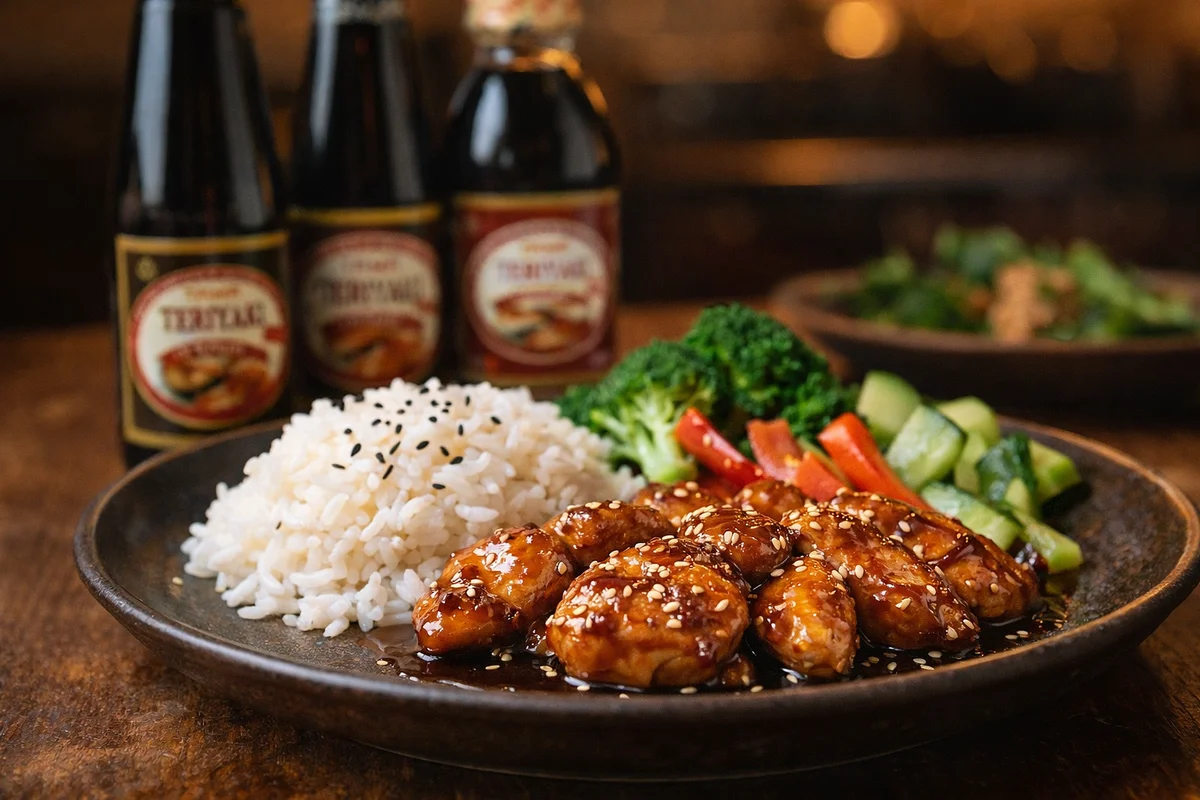
Teriyaki Chicken. A genre classic. Chicken thighs or breast are marinated in classic teriyaki for 30 minutes, then pan-fried or grilled. The sauce is brushed on in the last 5 minutes so it caramelizes without burning.
Teriyaki Salmon. Classic teriyaki + fish = one of the best pairings. Salmon fillet is marinated for 20–30 minutes and baked at 200°C for 12–15 minutes. Serve with rice and fresh vegetables.
Spicy Teriyaki Wings. Wings are marinated in spicy teriyaki for 2–3 hours, then baked at 220°C until crispy. Before serving — one more layer of sauce brushed on.
BBQ Teriyaki Steak. Steak is marinated in BBQ teriyaki for 1–2 hours and seared over high heat. The thick sauce creates a caramel crust. Works with beef, pork, and lamb.
Vegetable Wok. Classic teriyaki is added to the wok 2 minutes before done. Works with any vegetables: broccoli, peppers, carrots, mushrooms, green beans.
Burger. BBQ teriyaki instead of regular barbecue sauce — an unexpected but effective move. Apply to the patty or the top bun.
How to Marinate Properly
Teriyaki works as both a serving sauce and a marinade. But marinating time depends on the product:
- Fish: 20–30 minutes. Longer is unnecessary — the acid in the sauce can change the texture.
- Chicken: 30 minutes to 4 hours. The longer, the deeper the flavor penetrates.
- Pork, beef: 2–4 hours or overnight in the refrigerator.
- Tofu: at least 1 hour. Tofu absorbs slowly, but the result is worth it.
- Vegetables: 15–20 minutes or added during stir-frying.
Tip: set aside some sauce separately for serving. Marinade that has been in contact with raw meat cannot be used for drizzling — only after boiling.
What to Look for When Choosing Teriyaki
Teriyaki sauces in stores vary greatly in quality. Here's what to look for:
- Ingredients. Good teriyaki starts with soy sauce, followed by sugar or honey, spices (garlic, ginger, sesame). The shorter and clearer the ingredient list, the better. If water or sugar syrup is first, followed by flavorings and colorants — it's not the best choice.
- Consistency. Good teriyaki is moderately thick, not watery. If the sauce pours like water, it's likely heavily diluted.
- Flavor. A balance of sweet and salty with umami (deep flavor from soy sauce). Good teriyaki is multi-layered: sweetness first, then saltiness, then spicy notes of ginger and garlic. If the flavor is flat and one-dimensionally sweet — try a different sauce.
- Color. Dark brown, rich. Too light or unnaturally bright color — reason to check the ingredients more carefully.
| Parameter | Classic | Spicy | BBQ |
|---|---|---|---|
| Flavor | Sweet-salty, ginger | Sweet-spicy, peppery | Smoky, caramel |
| Heat | None | Moderate | None |
| Consistency | Medium | Medium | Thick |
| Best for | Chicken, fish, rice, tofu | Wings, pork, shrimp | Steak, kebab, burgers |
| Marinating time | 30 min — 4 hours | 2–3 hours | 1–4 hours |
How to Store
TAMA sauces have a shelf life of 12 months. Store an opened bottle in the refrigerator and use within 2–3 months. Shake before use — natural ingredients may separate slightly during storage.
Quick Guide: Which Teriyaki to Choose
Cooking Asian cuisine (wok, rice, noodles, tofu) — classic.
Like it spicy (wings, shrimp, pork) — spicy.
Grilling or barbecuing (steak, kebab, burger) — BBQ.
Can't decide — go with classic. It's the most versatile and suits 90% of dishes.
The base of TAMA sauces is soy sauce, honey, garlic, ginger, and sesame. The lineup also includes soy sauce and Black Pepper sauce — for those who want to try different flavors of Asian cuisine.
And if you can only pick one — go with classic. You can't go wrong.
Frequently Asked Questions
Is teriyaki sauce spicy or not?
Classic teriyaki is not spicy. It's a sweet-and-savory sauce based on soy sauce, ginger, and cane sugar. Spicy versions exist separately — for example, the TAMA lineup includes "Spicy Teriyaki" with added chili and black pepper.
What does teriyaki sauce taste like?
Sweet-and-savory with a spicy hint of ginger and garlic. Soy sauce provides umami and saltiness, sugar or honey adds caramel sweetness, and ginger and garlic bring a piquant note. When heated, the sauce caramelizes into a glossy glaze — hence the name (from the Japanese "teri" meaning glaze).
How does teriyaki differ from soy sauce?
Soy sauce is a salty liquid base. Teriyaki is a sauce built on soy sauce but with added sugar or honey, ginger, and garlic. Teriyaki is thicker, sweeter, and intended for glazing and marinating, while soy sauce is meant to be served as a table condiment alongside finished dishes.
What is teriyaki sauce made of?
The basic recipe — soy sauce, sugar or mirin (rice wine), ginger, garlic. TAMA sauces are based on soy sauce, honey, garlic, ginger, and sesame. The spicy variant additionally contains chili and black pepper.
Which teriyaki is best to choose?
If it's your first time — classic; it's the most versatile and suits 90% of dishes. If you like a kick — spicy. If you grill, barbecue, or make burgers — BBQ.
Which dishes does teriyaki sauce suit?
Chicken, salmon, tofu, rice, noodles, vegetables in a wok — classic. Wings, pork, shrimp — spicy. Steak, kebab, burgers, ribs — BBQ.
Can teriyaki be used as a marinade?
Yes, teriyaki is both a sauce and a marinade. Times: fish — 20–30 minutes, chicken — from 30 minutes to 4 hours, beef and pork — 2–4 hours. Marinade that has been in contact with raw meat must be boiled before drizzling.