Kvass is one of the oldest drinks: in Russia it has been drunk for more than a thousand years (Zugravu, Constantin, 2025). But not every kvass on the store shelf is live. In this article, we explain what live kvass is, how it differs from pasteurized kvass and what research says about its benefits.
What Is Live Kvass
Live kvass is a drink made by lactic acid and alcoholic fermentation. It is made from rye or wheat malt, bread starter and water. Kvass is fermented by lactic acid bacteria and yeasts (Ashaolu et al., 2025): they give kvass its tanginess, a light fizz and a little alcohol — no more than 1.2% (GOST 31494-2012). Kvass also contains sugar — how much, and how many calories a particular kvass has, is stated on the label.
The key difference of live kvass is that it is not pasteurized, so its bacteria and yeasts stay alive. That is why live kvass has a short shelf life and must be kept only in the refrigerator.
Live Cultures: Is Kvass a Probiotic?
Probiotics are live microorganisms that benefit health when consumed in adequate amounts. But not every live bacterium is a probiotic: the benefit of a specific strain has to be confirmed by research (FAO/WHO, 2006).
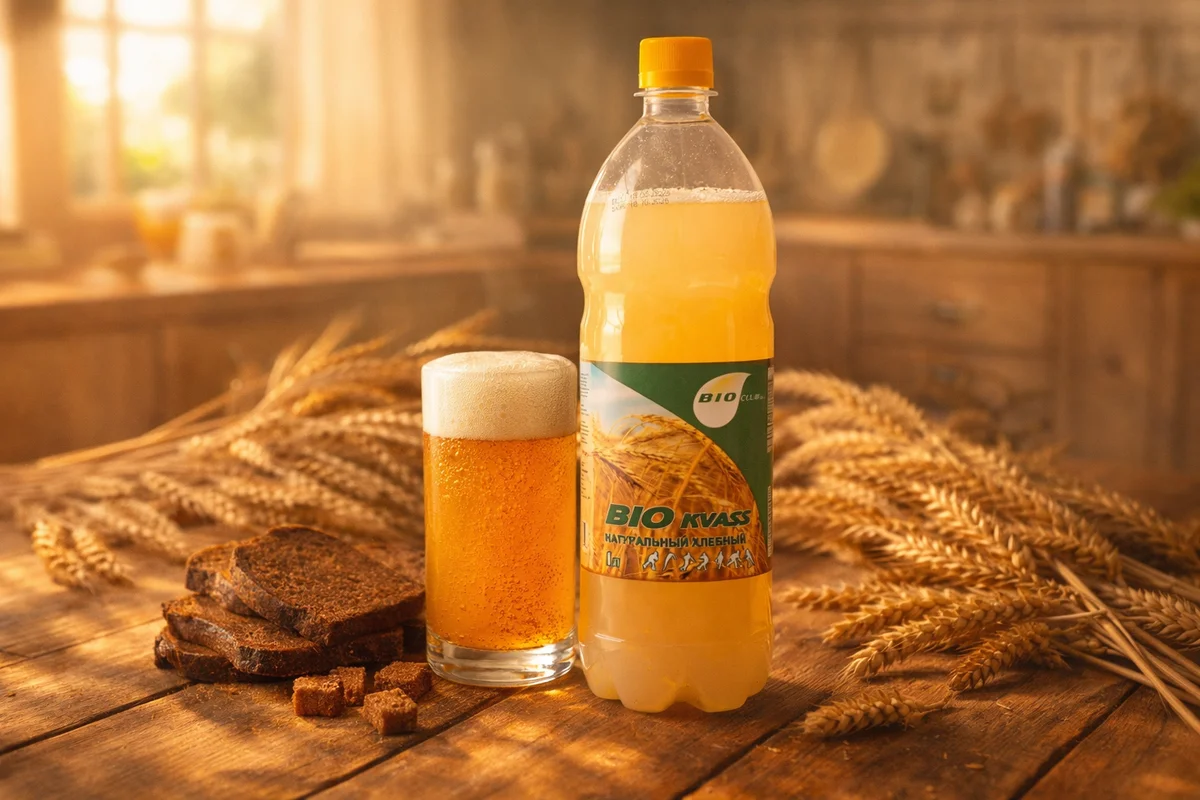
Live kvass contains lactic acid bacteria and yeasts. BioClub kvass contains over 10 billion bacteria in every bottle.
What Is Known About the Benefits of Live Kvass
Many fermented foods contain live microorganisms that are genetically similar to probiotic strains. There are still few clinical studies of these foods themselves, although benefits have been shown for some of them (Marco et al., 2017).
Kvass has been little studied. The authors of a review of Eastern European fermented foods write that fermentation produces organic acids, peptides and other interesting compounds in them, but there are still too few standardized human studies to draw firm conclusions (Zugravu, Constantin, 2025). So live kvass is a tasty traditional drink with live cultures, not a medicine.
Live Kvass vs Pasteurized: 5 Key Differences
Not every kvass on the store shelf is live. Here is how to tell them apart:
- Production method. Live kvass is made through natural fermentation. Commercial kvass is often made from concentrate with artificially added carbonation.
- Ingredients. Live kvass contains malt, water, and starter culture. Industrial kvass often includes sugar, flavorings, acidity regulators, and preservatives.
- Shelf life. Live kvass keeps for a shorter time: up to 4 months sealed, and only in the refrigerator.
- Live cultures. In live kvass the bacteria and yeasts are alive; pasteurization kills them.
- Taste. Live kvass has a richer, deeper flavor with natural tanginess. Commercial versions are often sweeter and flatter.
| Live kvass | Pasteurized kvass | |
|---|---|---|
| Shelf life | Up to 4 months (sealed) | 3–12 months |
| Live cultures | Yes (lactic acid bacteria and yeasts) | No (killed by heat) |
| Preservatives | No | Often present |
| Taste | Soft, natural | Standardized |
| Storage | Refrigerator only | Room temperature |
Who Live Kvass Suits
Those who avoid dairy. Kvass contains no milk, yet it has live fermentation cultures — like kefir.
In hot weather. Cold kvass is refreshing and quenches thirst.
For those seeking natural products. The BioClub lineup offers seven flavors: bread, rye, honey, cranberry, barberry, okroshka, and oat — all without preservatives or artificial colors.
Contraindications
Live kvass is not for everyone. Avoid it, or drink it only after talking to your doctor, if you have:
- pregnancy or a reason to avoid alcohol — live kvass contains a little alcohol (Zugravu, Constantin, 2025), and no safe amount of alcohol during pregnancy has been established (CDC);
- diabetes — kvass contains sugar;
- a flare-up of stomach or bowel disease — gastritis, ulcers and others;
- a tendency to bloating — a fizzy fermented drink may make it worse.
Children under 3 are better off without kvass because of the alcohol. If you are trying live kvass for the first time, start with one glass and see how you feel.
How Much to Drink Per Day
There is no scientifically established amount for kvass. It is a sweet drink with a little alcohol: if you watch your sugar intake, count kvass too — its sugar content is stated on the label. Kvass is best served chilled.
Summary
Live kvass is a traditional naturally fermented drink with live cultures, not a medicine: there is almost no research on its health benefits yet. Choose naturally fermented kvass without preservatives or pasteurization. Check the label: a short shelf life and live starter culture in the ingredients are signs of genuine live kvass.
Sources
- Zugravu C. A., Constantin C. Eastern European Fermented Foods: Nutritional Value, Functional Potential, and Cultural Heritage — Foods, 2025
- Ashaolu T. J., Varga L., Greff B. Nutritional and functional aspects of European cereal-based fermented foods and beverages — Food Research International, 2025
- GOST 31494-2012 "Kvasses. General specifications"
- Probiotics in Food: Health and Nutritional Properties — FAO/WHO, 2006
- Marco M.L. et al. "Health benefits of fermented foods: microbiota and beyond" — Current Opinion in Biotechnology, 2017
- About Alcohol Use During Pregnancy — Centers for Disease Control and Prevention (CDC)